
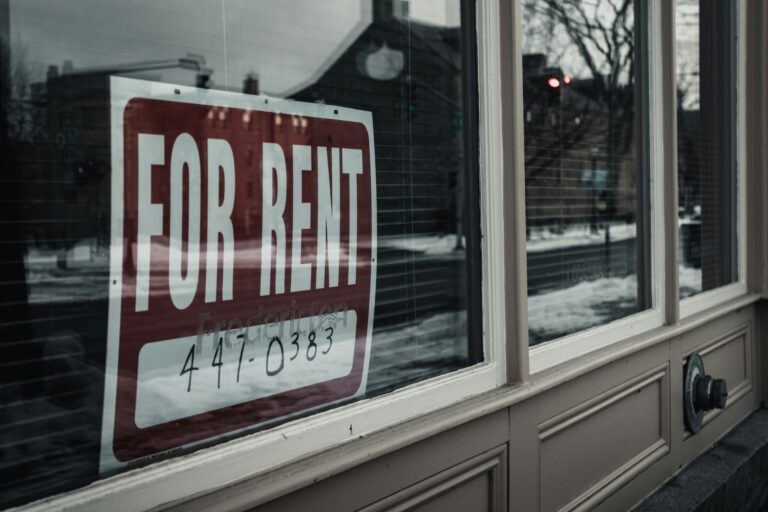
The Treasurer’s Budget Speech on 12 May highlighted a range of initiatives under the heading, “More homes and a fair go for first home buyers”. These included a lift to total investment in housing, lower deposits, tax reform, investment in power, roads and drains for new housing developments, and cutting red tape and planning delays, amongst other measures.
The Treasurer stated, “These housing reforms go to the core of our Budget strategy. Dealing with the very real pressures on people right now”.
One very targeted measure in the Budget is to fix the “youth housing penalty”, by securing homes for 4,000 young people at risk of homelessness. This specific issue was highlighted in the most recent report of the Economic Inclusion Advisory Committee (EIAC).
This initiative is very welcome, but there is a much larger group of people on low incomes who face very real pressures right now. This includes many of the 1.4 million income units receiving Commonwealth Rent Assistance (CRA).
How Commonwealth Rent Assistance works
CRA is a major form of additional assistance paid to help people receiving social security payments, including Family Tax Benefit, with their private rental costs.
Assistance varies with the type of living arrangements and payments received. Currently, a single person gets at most $107.70 a week in CRA, a couple combined gets a little over $100 a week, and a family with three children gets up to $143 per week.
There is a minimum threshold before any help is given, which is then paid at 75 cents for every dollar of rent up to the maximum payment limits and maximum rent levels. Above these levels, no further assistance is provided.
This design means that people receiving CRA get between 40% and 50% of their rent paid up to the maximum levels. Above these levels, the share of rent paid further reduces. This also means that more than half the rent paid comes out of either their base rates of payment or their payments plus other earnings or income.
These people are experiencing severe housing pressures right now, and there was nothing new in the Budget to help them.
What is housing stress?
The Australian Housing and Urban Research Institute (AHURI) define households as being in housing stress when their income is in the bottom 40% of the income distribution and they are paying more than 30% of their income in housing costs.
ABS data show that nearly all (91%) people on social security pensions and allowances are in the bottom 40% of the income distribution and they account for more than half of all income units in the lowest 40%.
This measure, if anything, understates the extent of housing stress that private renters who receive income support face.
This is because many people on income support payments are a very long way below the 40th percentile of the income distribution. A single person receiving JobSeeker Payment all year receives an income including CRA of just over three-quarters of the income of someone at the 10th percentile income level.
The EIAC report shows that not only are these people extremely poor, but they also face housing costs that can be much higher than 30% of their very low incomes – in many cases more than 40% or 50% of their incomes.
Past increases in CRA increased the effectiveness of the payment in reducing rental stress
CRA maximum rates are updated twice a year on March 20 and September 20 in line with the Consumer Price Index (CPI). There were additional real increases of 15% in 2023 and 10% in 2024. There was no increase in 2025, and none has been included in this year’s Budget.
The EIAC’s 2024 Report showed that following the real increase in 2023, the proportion of CRA income units paying more than 30% of their income in rent fell from 42.3% to 38.6%. This was the first time since 2022 that this level of rental stress was lower than 40%.
The latest report shows that between December 2024 and December 2025, the share of those paying 30% or more of their income in rent increased from 39.3% to 42.0%.
Rental stress is much higher for people receiving JobSeeker (61.8%) and Youth Allowance (60%-75%) than for those receiving Age or Disability Pensions or Carer Payment (30%-38%), reflecting their lower basic payments.
That is, all the improvement in reduced rental stress as a result of the increases in 2023 and 2024 has been reversed, and rental stress has now returned to its December 2022 level.
Overall, these figures remain extremely worrying – of the 1.4 million recipients of CRA in December 2025, more than 240,000 recipients (17.3%) were paying more than half their income in rent.
The latest EIAC Report also calculated the extent of rental stress “without CRA”, which is the share of people paying more than the 30, 40, and 50% level if CRA were not included in their payments.
On this basis, nearly three-quarters (73.7%) of CRA households would be paying more than 30% of their income in housing costs, more than half (52.3%) would be paying more than 40% of their income in housing costs, and around one-third would have paid more than half their income in housing costs.
This discussion demonstrates that increases in basic payment rates and in CRA can be effective in reducing rental stress, and the Government is to be congratulated for their real increases in 2023 and 2024.
But there have been no increases in the last two Budgets and as a result, levels of rental stress have increased. Further increases in CRA are needed if the situation is not to continue to deteriorate further.





Recent Comments