
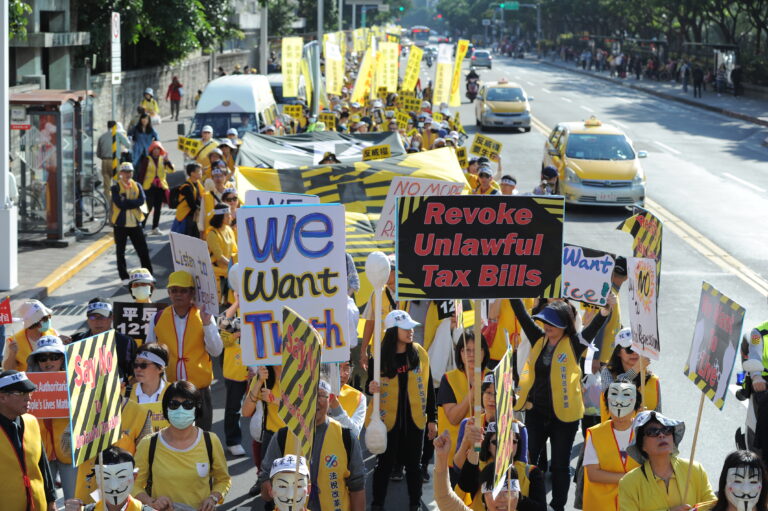
Effective tax administration rests on two pillars: finality and fairness. Finality ensures that once a tax dispute is resolved, it stays resolved. Fairness guarantees that taxpayers do not shoulder the cost of government errors.
Taiwan’s recent amendments to its Tax Collection Act have strengthened finality, but may have done so at the expense of taxpayer fairness. By contrast, Australia’s Income Tax Assessment Act 1936 grants the commissioner flexible amendment powers under section 170.
Our comparison reveals how Taiwan’s law risks swinging the balance far from fairness.
Taiwan’s new restriction on tax refunds
Under Article 28 of the Tax Collection Act, taxpayers can request refunds when they overpay. In December 2021, legislators inserted a new Paragraph 3. This provision bars any refund claim after an assessment is upheld by the administrative court.
As a result, even if the overpayment stems from a clear error by the tax authority, taxpayers lose any right to recover their funds once a court judgment is final.
Case example: Taichung High Administrative Court’s 2022 Judgment No. 122
A taxpayer who overpaid income tax and penalties in 1992 filed a refund request before the new rule took effect. Despite the timing, the court applied Paragraph 3 retroactively.
The court denied the refund on the grounds of res judicata, a legal doctrine that prevents re-litigation of final judgments. This strict interpretation elevates res judicata above constitutional guarantees of fair taxation and due process.
This case, along with other similar incidents, has seriously eroded public trust in the fairness and reliability of the Taiwanese tax system. It has also revealed critical flaws in the judicial mechanisms intended to protect citizens from unjust enrichment by the government, highlighting the urgent need for reform.
Australia’s flexible amendment powers
Australia allows its Commissioner of Taxation to correct assessments under section 170 of the Income Tax Assessment Act 1936. Three landmark cases highlight how Australian tax law balances finality with fairness:
1. Fabry v Commissioner of Taxation [2003]
The taxpayer argued that the commissioner’s section 170 power was suspended once an objection went to the Administrative Appeals Tribunal. The Federal Court rejected this, holding that section 170’s specific amendment authority overrides the general prohibition in the Administrative Appeals Tribunal Act. This ensures that genuine errors can be corrected without undue procedural obstacles.
2. Epov v Commissioner of Taxation [2007]
The taxpayer claimed that an appeal to the Federal Court blocked further amendment power. The court confirmed that as long as amendments fall within the statutory time limits of section 170(2), the commissioner may correct assessments—even during active appeals. This ruling focuses on getting tax liabilities right rather than technical delays.
3. Chemical Trustee Ltd v Deputy Commissioner of Taxation [2014]
The dispute involved summary judgment proceedings on assessments amended for different years. The Federal Court held that res judicata does not bar fresh proceedings so long as each assessment notice is distinct. This decision underscores that section 170 exists to fix genuine errors, even after earlier judgments are entered.
These cases show that Australia’s system does not lock in mistakes even after a review, an appeal, or a final decision has been made for the earlier assessment. Section 170 respects time limits and judicial review, while permitting the commissioner to ensure taxpayers ultimately pay—or recover—the correct amount.
Risks of Taiwan’s current amendment
Taiwan’s rigid application of res judicata can:
- Legitimise administrative errors by blocking refund claims after final judgments.
- Undermine constitutional due process by overriding procedural safeguards and equitable relief.
- Erode taxpayer trust if overpayments become irrecoverable through no fault of the taxpayer.
Although Taiwan’s administrative relief system allows rehearing of a case for procedural flaws, the amendment treats all final judgments alike. It ignores whether a decision rests on substantive merits or mere technicalities.
In some cases, taxpayers have pursued constitutional review of the underlying legal provisions through petitions to the Constitutional Court. So far, none of these petitions have been accepted for review.
The Constitutional Court’s inaction has deepened public frustration with legislative measures that violate principles of tax justice and has further weakened confidence in Taiwan’s judicial review system.
Recommendations for balanced reform
Drawing on Australia’s tax administration model, Taiwan might consider:
- Introduce a “fairness carve-out” in Article 28 to allow refunds for overpayments caused by administrative errors, even after final judgments, or;
- Limit the scope of res judicata to matters that a court has conclusively resolved on their merits, rather than encompassing decisions dismissed for procedural reasons. By drawing that line, courts would preserve the doctrine’s goal of preventing repetitive litigation without shutting the door on new evidence or correcting administrative errors under fresh claims.
These changes would preserve the certainty of final judgments while protecting taxpayers from irreversible government mistakes. They could bolster trust and align Taiwan’s system with global best practices.
Conclusion
Balancing finality and fairness in tax law requires nuanced consideration. Taiwan’s recent amendment tips the scale too far towards finality, risking unjust outcomes.
Learning from Australia’s flexible approach could help Taiwan restore that balance. Policymakers, practitioners, and academics should revisit the amendment to ensure Taiwan’s tax system delivers both efficiency and justice.
This post is based on our journal article “The Limitation of Res Judicata in Tax Refunds Due to Government Errors” (2025) 54 AT Rev 138. Readers who wish to explore these issues in greater depth can find a detailed discussion in the full paper.






Recent Comments